
Debunking Nutrition Myths: What's True and What's Outdated?
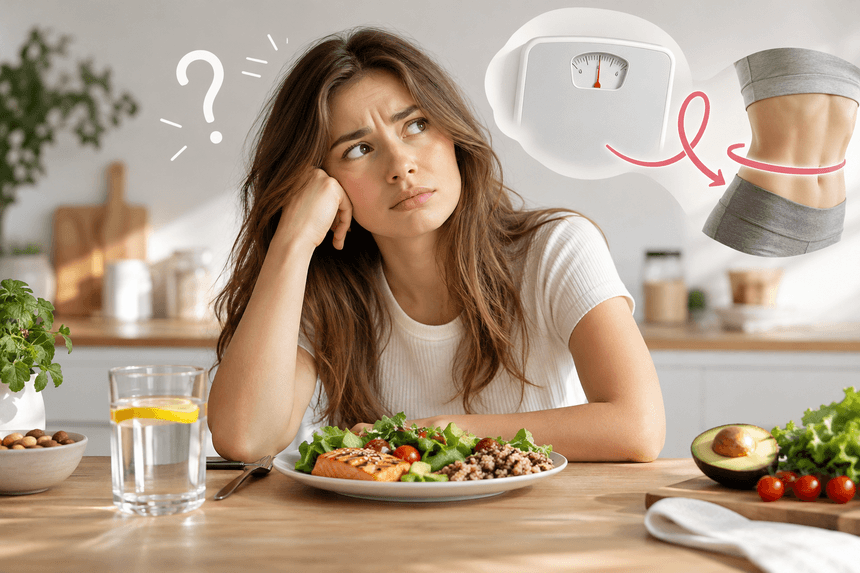
“Don't eat after 6 p.m.” “Carbs make you gain weight.” “Fat raises cholesterol.” “You have to give up bread to lose weight.” “Fruit eaten at night turns into fat.”
You've probably heard at least one of these statements.
Nutrition is surrounded by rules that have been repeated for generations, shared across social media, and eventually accepted as facts.
But nutrition is much more complex than a list of foods you are “allowed” or “not allowed” to eat.
In this DIKETO guide, we'll take a closer look at some of the most common nutrition myths and explain what actually matters.
Myth #1. You shouldn't eat after 6 p.m.
Your body doesn't stop using energy after 6 p.m., and food eaten in the evening doesn't automatically turn into body fat.
For changes in body weight, your overall energy balance over time matters much more than a specific number on the clock.
That doesn't mean meal timing is irrelevant. A large meal immediately before bed may cause digestive discomfort or affect sleep for some people.
A better question is not “Can I eat after 6 p.m.?” but “When and how much should I eat so that my diet remains balanced and I feel good?”
Myth #2. Carbohydrates make you gain weight
Carbohydrates themselves are not automatically responsible for gaining body fat.
Bread, grains, potatoes, pasta, vegetables, fruit, and legumes all contain carbohydrates, yet they differ significantly in nutritional value, fiber content, calorie density, and level of processing.
Body fat tends to increase when energy intake consistently exceeds energy expenditure over time.
There is therefore no need to treat all carbohydrates as the enemy.
It's more useful to consider your entire diet: total energy intake, protein, fiber, food quality, and portion sizes.
Myth #3. All dietary fat raises cholesterol
The relationship between dietary fat and blood cholesterol is much more complex than “eat fat, get high cholesterol.”
Both the amount and type of dietary fat matter.
Unsaturated fats found in foods such as fish, nuts, seeds, avocado, and plant oils can be part of a balanced diet.
On the other hand, a high intake of saturated fat can contribute to higher LDL cholesterol in many people.
Blood lipid levels are also influenced by genetics, body weight, physical activity, smoking, certain medical conditions, and other factors.
So “fat” should not automatically be equated with “bad cholesterol.”
Myth #4. You have to give up bread to lose weight
Bread doesn't have a special ability to prevent weight loss.
You can include bread in your diet and still lose weight when your overall energy intake and eating pattern support your goals.
Quantity and the type of bread matter.
Whole-grain bread, for example, can provide carbohydrates and fiber and fit perfectly well into a balanced diet.
Often, the issue isn't one slice of bread but overall calorie intake, portion sizes, and what is eaten with it.
Myth #5. Fruit eaten at night turns into fat
Your body doesn't activate a special mechanism at a particular hour that automatically turns fruit into body fat.
Fruit provides carbohydrates, water, vitamins, minerals, and fiber and can be part of a balanced diet at different times of the day.
If you enjoy an apple, berries, or another fruit in the evening, the time of day doesn't suddenly make that food unhealthy.
Once again, the overall eating pattern matters more than one food or one particular hour.
Myth #6. Everyone has to eat breakfast
Breakfast can be a convenient and nutritious meal, but the idea that absolutely everyone must eat breakfast to maintain a normal metabolism or lose weight is too simplistic.
Some people are hungry shortly after waking up. Others naturally prefer their first meal later.
What you eat throughout the entire day is generally more important than forcing yourself to eat simply because you've been told breakfast is mandatory.
If you do eat breakfast, aim to make it satisfying and nutritionally balanced.
Myth #7. Everyone needs exactly two liters of water every day
There is no single universal amount of water that is equally appropriate for everyone.
Fluid needs can vary depending on body size, climate, physical activity, diet, health status, and other individual factors.
We also obtain fluids from other beverages and foods.
For this reason, the rule of “two liters of water a day for everyone” is more of a generalization than an exact individualized recommendation.
Want to know how much water you may need?
Use the DIKETO Water Calculator to estimate your daily water needs.
→ Calculate your daily water needs
Myth #8. You can eat unlimited amounts of healthy foods
Nuts, avocado, olive oil, cheese, whole-grain bread, and many other nutritious foods can be excellent parts of a balanced diet.
But “healthy” doesn't mean “calorie-free.”
Nuts and oils, for example, are energy-dense. They can absolutely be included in a nutritious diet, but portion size still matters, particularly when weight loss is the goal.
Nutritional value and calorie content are two different characteristics.
Myth #9. You have to eliminate sugar completely to lose weight
It makes sense to limit excessive amounts of added sugar, particularly when sweets and sugary drinks make up a significant part of the diet.
But successful weight loss doesn't require a complete ban on sugar.
For some people, rigidly dividing food into “good” and “forbidden” categories can make eating more difficult and increase feelings of restriction.
A more practical approach is to build most of your diet around nutritious foods while leaving reasonable room for foods you enjoy.
Myth #10. You need to eat as little as possible to lose weight
“Eat less and you'll lose more” is another oversimplification.
Excessive calorie restriction may lead to intense hunger, low energy, reduced performance, and difficulty maintaining the eating pattern over time.
The goal of a sensible weight-loss approach isn't to eat as little as possible. It's to create an appropriate energy deficit while still providing your body with the nutrients it needs.
Why are nutrition myths so easy to believe?
Because simple rules are easy to remember.
“Don't eat after six” is much easier to communicate than an explanation involving energy balance, individual needs, eating behavior, and the composition of someone's entire diet.
Personal experience can also be misleading.
Someone gives up bread and loses weight, so they conclude that bread was the problem. But removing bread may also have reduced their total calorie intake, snacks, or portion sizes.
The result may be real while the explanation for it is incorrect.
How can you recognize a nutrition myth?
Be cautious when one rule is presented as universally necessary for everyone or when one food is blamed for almost every health or weight-related problem.
Statements such as:
“never eat this”
“you must completely eliminate this”
“this food turns directly into fat”
“this food detoxes your body”
“this works for everyone”
deserve closer examination.
Nutrition science is rarely that black and white.
What actually matters in a balanced diet?
Instead of building your diet around an endless list of restrictions, focus on the fundamentals:
adequate protein;
vegetables, fruit, and other sources of fiber;
an appropriate energy intake;
dietary variety;
reasonable amounts of fats and carbohydrates;
a meal pattern that works for your lifestyle;
adequate hydration;
physical activity, sleep, and other lifestyle factors.
You don't need a perfect diet. You need an eating pattern that is nutritious, realistic, and sustainable.
The bottom line
Nutrition shouldn't become an endless list of foods to fear.
Bread doesn't automatically make you gain weight. Carbohydrates don't suddenly become the enemy at a certain hour. One dessert doesn't ruin your diet, and one “superfood” cannot make an otherwise poor diet healthy.
Instead of judging individual foods in isolation, look at your diet as a whole.
That's why at DIKETO we don't simply learn rules. We learn to understand why we eat the way we do and how nutrition works in real life.
This article is for informational and educational purposes only and is not a substitute for individualized medical advice from a physician or another qualified healthcare professional.